
Hi, I'm Vilma B. I live in Nevada. Craig "The Water Guy" Phillips asked me to share my homeowner experience with local tap water from the city using the SoftPro ECO™ City Water Softener - Best Water Softener Systems for City Water I purchased. This is how my adventures played out. I hope this helps you in your decision.
Did you know that even "treated" city water can leave your home feeling like a battleground against mineral buildup?
That was my reality for three years until I discovered the SoftPro ECO water softener. Living in Nevada with notoriously hard city water, I was spending weekends scrubbing white residue off everything from my coffee maker to my shower doors, watching my monthly cleaning supply budget climb higher than my water bill.
After eight months of daily use, I'm sharing my complete experience with this system - the good, the challenging, and everything in between. If you're tired of fighting mineral deposits and wondering whether a water softener is worth the investment, my journey might help you decide.
The Hard Water Problem That Drove Me to Find a Solution
Before diving into my SoftPro ECO experience, let me paint you a picture of what hard city water was doing to my home and my sanity. Nevada's municipal water supply consistently tested at 18 grains per gallon - that's classified as "very hard" by water quality standards.
Every morning started with the same frustration: crusty white buildup on my coffee maker's heating element, requiring weekly vinegar treatments just to brew a decent cup. My dishwasher left spots on everything despite using rinse aid, and I was rewashing "clean" dishes more often than I care to admit.
The shower situation was even worse. My glass doors developed a cloudy film that no amount of scrubbing could completely remove. I tried everything from CLR to homemade vinegar solutions, spending entire Saturday mornings in rubber gloves, working up a sweat just to see through my shower glass.
But the real wake-up call came when my plumber pointed out calcium buildup in my water heater during a routine inspection.
He explained that mineral accumulation was reducing efficiency and could lead to premature replacement - a $1,200 expense I definitely wasn't planning for.
My skin felt perpetually dry despite expensive moisturizers, and my hair seemed dull no matter what shampoo I used. I was spending nearly $40 monthly on bottled water because our tap water tasted metallic and left a chalky aftertaste.
My Research Journey and Why I Chose SoftPro ECO
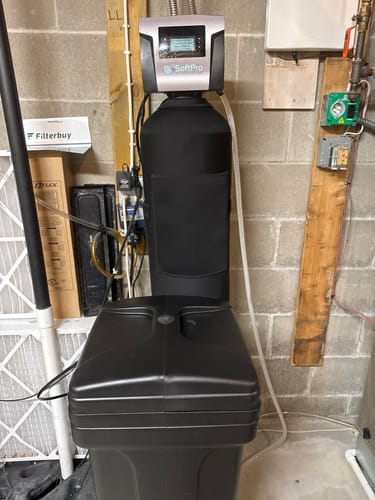
Once I accepted that a water softener wasn't a luxury but a necessity, I dove into research mode. I spent three weeks comparing technologies, reading reviews, and trying to understand the difference between salt-based ion exchange systems and salt-free conditioners.
The technology comparison was overwhelming at first. Salt-based systems actually remove calcium and magnesium through ion exchange, swapping hardness minerals for sodium ions. Salt-free systems condition water without removing minerals, changing their structure to reduce scale formation. For my severe hardness levels, multiple sources recommended traditional ion exchange for maximum effectiveness.
I narrowed my focus to capacity and efficiency ratings. The SoftPro ECO's 48,000 grain capacity caught my attention because it could handle our household of four with room to spare. The high-efficiency resin meant longer periods between regeneration cycles, reducing salt consumption and water waste.
What sealed the deal was the upflow regeneration design and the SoftPro Valve's reputation for reliability.
Traditional downflow systems can channel water through already-cleaned resin, reducing efficiency. The upflow design ensures maximum contact with exhausted resin, providing more thorough regeneration with less water and salt.
The metered regeneration feature meant the system would only regenerate when actually needed, not on arbitrary time schedules. Living in a drought-conscious state, water conservation mattered to me beyond just cost savings.
Price-wise, the SoftPro ECO positioned itself in the middle tier - more expensive than basic hardware store units but significantly less than premium brands with similar features. The 10-year warranty on components provided confidence in long-term durability.
Unboxing and First Impressions of Build Quality
The SoftPro ECO arrived on a Tuesday morning via freight delivery, which I had scheduled in advance. The unit came securely packaged on a wooden pallet, wrapped in protective plastic with corner guards protecting the tank during transport.
My first impression was the substantial weight - approximately 150 pounds fully assembled. The fiberglass tank felt solid with a smooth, professional finish that looked more expensive than I expected. The digital SoftPro Valve head appeared well-constructed with clearly labeled connections and a bright, easy-to-read display.
Inside the packaging, I found comprehensive installation documentation, a water test kit, and all necessary fittings for standard 1-inch plumbing connections. The manual was actually readable - not the typical poorly translated instruction booklet that comes with many appliances.
The bypass valve assembly impressed me with its robust construction and smooth operation. These components would handle daily water pressure without the flimsy feel of cheaper alternatives I had examined at home improvement stores.
One pleasant surprise was the compact footprint compared to competitor models with similar capacity. The 10-inch diameter tank fit comfortably in my utility room corner, leaving space for salt storage and maintenance access.
Installation Experience and Initial Setup Process

I decided on professional installation after consulting with my plumber about the scope of work required. The job needed cutting into the main water line, installing a bypass valve system, connecting electrical for the SoftPro Valve, and setting up proper drainage for regeneration cycles.
The installation took approximately four hours, including time to configure the initial programming. My plumber commented positively on the quality of fittings and the logical design of the bypass system. He had worked with various brands and noted that the SoftPro Valve's programming interface was more intuitive than older mechanical timer systems.
We installed the system on the main line after the pressure tank but before any branch lines, ensuring all household water would be treated. The drain line connected to my utility sink with a proper air gap to prevent backflow contamination.
The initial programming required inputting our water hardness level (18 grains), household size, and setting regeneration preferences.
The system calculated optimal regeneration frequency automatically, estimating cycles every eight days based on our projected usage patterns.
After installation, we performed a complete system flush and initial regeneration cycle to prepare the resin bed. The first regeneration took about 90 minutes, during which we had limited water pressure as the system cycled through backwash, brine draw, slow rinse, and fast rinse phases.
The startup process was remarkably smooth, with clear indicator lights showing each phase of operation. The digital display provided remaining capacity estimates and days until the next regeneration, taking the guesswork out of system monitoring.
Comprehensive Analysis of Key Features and Performance
Upflow Regeneration Technology
The upflow regeneration system has proven its efficiency claims over eight months of operation. Instead of conventional downflow systems that can waste brine solution on already-clean resin, the upflow design forces brine through the most exhausted resin first, maximizing regeneration effectiveness.
I track salt consumption carefully, and the system uses approximately 8 pounds per regeneration cycle - significantly less than the 15-20 pounds my neighbor's conventional system requires. With regenerations occurring every 7-8 days, my monthly salt consumption averages 32-35 pounds compared to estimates of 50 pounds for less efficient systems.
The water usage during regeneration is equally impressive. Each cycle consumes roughly 25 gallons compared to 50-60 gallons typical for downflow systems. In eight months, this efficiency has saved approximately 800 gallons of water while providing superior softening results.
Digital SoftPro Valve and Control System
The digital SoftPro Valve has transformed my relationship with water softener maintenance from mysterious guesswork to informed monitoring. The LCD display shows exact remaining capacity in gallons, days until next regeneration, and current operating status at a glance.
The metered regeneration feature has proven incredibly accurate. Rather than regenerating on fixed schedules regardless of actual usage, the system tracks water flow and initiates regeneration only when the resin bed approaches exhaustion. During a recent week when we traveled, regeneration automatically delayed until we returned and resumed normal usage.
Programming adjustments are straightforward through the intuitive menu system. When seasonal usage patterns changed, I easily modified the hardness setting and household size parameters without consulting the manual. The valve stores these settings through power outages, thanks to the built-in battery backup system.
High-Capacity Resin and Ion Exchange Performance
The 48,000 grain capacity handles our family of four comfortably with headroom for guests or increased usage periods. I've tested water hardness monthly using the provided test kit, and post-softening levels consistently measure 0-1 grains per gallon - essentially complete hardness removal.
The high-efficiency resin maintains consistent performance throughout the regeneration cycle. Even immediately before regeneration, when capacity approaches exhaustion, I detect no breakthrough hardness in daily use. Coffee makers stay clean, dishes emerge spotless, and shower surfaces remain film-free.
The resin bed's longevity appears excellent based on consistent performance over eight months. Some systems show declining efficiency as resin ages, but the SoftPro ECO maintains the same effectiveness as day one. The manufacturer rates resin life at 10 years with proper maintenance.
Construction Quality and Durability Features
The fiberglass tank construction has withstood Nevada's temperature extremes without any visible stress or degradation. Unlike cheaper plastic tanks that can crack or warp, the fiberglass maintains structural integrity while providing excellent corrosion resistance.
Internal components show no signs of wear despite daily operation and regular regeneration cycles. The SoftPro Valve's precision mechanism operates quietly and smoothly, without the grinding or clicking sounds that develop in lower-quality systems over time.
The bypass valve system functions flawlessly, allowing easy isolation for maintenance while maintaining household water pressure. The brass construction resists corrosion and provides confident shut-off when needed.
Real-World Performance Results and Daily Life Impact
The transformation in daily life became apparent within 72 hours of installation. My coffee maker, which had required weekly descaling treatments, now operates three months between cleanings with only minimal mineral residue visible on the heating element.
Dishwasher performance improved dramatically - I eliminated rinse aid completely while achieving better results than before softening. Glassware emerges crystal clear, and silverware shows no water spots or mineral film. I've reduced dishwasher detergent usage by approximately 30% while maintaining superior cleaning results.
Shower experiences transformed from frustrating to actually enjoyable. Soap lathers immediately and rinses completely clean, eliminating the sticky feeling that characterized hard water showers. My skin feels noticeably softer and requires less moisturizer, particularly during Nevada's dry winter months.
Hair texture improved within two weeks of soft water use.
The dull, brittle feeling disappeared, replaced by natural softness and manageability. I've reduced shampoo and conditioner usage significantly while achieving better results.
Laundry benefits exceeded my expectations. Clothes feel softer without fabric softener, colors appear brighter, and white items stay whiter longer. I've reduced laundry detergent by nearly half while achieving superior cleaning performance. Towels maintain their fluffiness wash after wash instead of becoming stiff and rough.
The elimination of scale buildup throughout the house saves hours of weekly cleaning time. Faucets stay shiny, toilet bowls resist mineral rings, and appliances function without constant descaling maintenance. I estimate saving 3-4 hours weekly on cleaning tasks directly related to hard water issues.
Water taste improvement was an unexpected bonus.
While softened water contains slightly more sodium, the overall taste is cleaner and more refreshing than our original hard city water. We've eliminated bottled water purchases entirely, saving approximately $35 monthly while enjoying better-tasting water from every tap.
Operating Costs and Long-Term Value Analysis
After eight months of operation, I've carefully tracked all costs associated with the SoftPro ECO system to understand the true economics of water softening.
Salt consumption averages 32-35 pounds monthly, costing approximately $8-10 depending on salt prices and quality.
I use solar salt crystals, which dissolve cleanly and minimize residue in the brine tank. Premium salt costs slightly more but reduces maintenance requirements and extends system life.
Electrical consumption is minimal - the SoftPro Valve draws power only during regeneration cycles and for display operation. My utility monitoring shows approximately $2-3 monthly in additional electrical costs, primarily for the regeneration motor and valve operations.
Water usage for regeneration adds roughly 200 gallons monthly to our consumption, costing approximately $6-8 based on local utility rates. This seems significant until compared to the savings generated by soft water throughout the house.
The efficiency gains offset operating costs substantially. Reduced soap and detergent usage saves approximately $25 monthly across dishwasher detergent, laundry products, bath soap, and shampoo. Eliminating bottled water purchases saves another $35 monthly while providing better taste and convenience.
Appliance protection provides harder-to-quantify but substantial value. My water heater operates more efficiently without scale buildup, potentially extending its life by 3-5 years. Dishwasher, washing machine, and other water-using appliances benefit similarly from scale-free operation.
Cleaning supply reduction saves approximately $15 monthly on specialized descaling products, bathroom cleaners, and extra softprowatersystems.com scrubbing supplies previously needed for mineral buildup removal.
Total monthly operating costs average $16-21, while direct savings exceed $75 monthly. The net positive cash flow of $55 monthly means the system pays for itself while improving quality of life significantly.
Honest Assessment of Limitations and Minor Drawbacks
Despite overwhelmingly positive results, the SoftPro ECO isn't perfect for every situation. Here are the limitations I've encountered during eight months of ownership.
The regeneration process creates temporary water pressure reduction and slight noise that's noticeable during nighttime hours.
While not loud enough to wake anyone, the motor and water flow sounds are audible if you're near the utility room during regeneration cycles. Fortunately, the programmable timer allows scheduling regeneration for convenient times.
Salt loading requires some physical effort, particularly for elderly users or those with mobility limitations. The standard 40-pound salt bags need lifting and pouring into the brine tank monthly, though the wide opening makes the process straightforward for most users.
The system requires dedicated electrical supply and proper drainage, which limited installation location options in my home. Homes without utility room access may need additional plumbing and electrical work, increasing installation complexity and cost.
Softened water isn't ideal for everyone's taste preferences. While I find it cleaner and more refreshing, visitors occasionally comment on the "slippery" feeling during showering or slight taste differences. This adaptation period typically resolves within days of regular use.
Maintenance requirements, while minimal, must be performed consistently for optimal performance. Monthly salt level monitoring, annual cleaning of the brine tank, and periodic system sanitization require attention to detail and scheduling.
The initial investment represents a significant expense for many households. While the long-term value proposition is compelling, the upfront cost may stretch budgets already dealing with other home maintenance priorities.
During power outages, the system defaults to bypass mode, providing unsoftened water until power restoration. While this protects the system and maintains water pressure, it temporarily eliminates the benefits of soft water during extended outages.
Space requirements may challenge homes with limited utility areas. While compact compared to competitors, the system still needs dedicated floor space, ceiling clearance for salt loading, and access for maintenance procedures.
