
Hi, I'm Gray C, and I live here in Tampa. When Craig "The Water Guy" Phillips reached out asking me to share my real-world experience with the SoftPro ECO™ City Water Softener - Best Water Softener Systems for City Water I picked up, I figured why not help out fellow homeowners dealing with similar water issues. Here's exactly how my whole journey unfolded over the past several months, and I genuinely hope my honest take helps you make the right call for your home.
The Hard Water Nightmare That Started It All
Let me paint you a picture of what life was like before I installed this system. Have you ever stepped out of the shower feeling like you used soap made of sandpaper?
That was my daily reality here in Tampa. The municipal water, while technically safe to drink, was absolutely brutal on everything it touched.
My wife and I first noticed the problem about eighteen months ago when we moved into our current home. Within weeks, white crusty deposits started appearing on every faucet, showerhead, and glass surface. Our coffee maker began making this awful gurgling sound, and honestly, the coffee started tasting like it was brewed with liquid chalk.
The real wake-up call came when our dermatologist asked if we'd moved recently during my wife's appointment for persistent skin irritation. Did you know that hard water minerals can actually strip your skin's natural oils and worsen conditions like eczema?
Tampa's water typically measures between 8-12 grains per gallon of hardness, putting it firmly in the "hard" to "very hard" category according to Water Quality Association standards.
I tested our incoming water with a basic TDS meter and got readings consistently around 180-220 parts per million. While that's within EPA guidelines for safety, it explained why our dishes came out of the dishwasher looking foggy, why soap barely lathered, and why our water heater seemed to be working overtime just to deliver lukewarm showers.
The breaking point was discovering calcium buildup inside our six-month-old tankless water heater during a routine maintenance check. The technician warned that without water treatment, we'd be looking at expensive descaling services every few months or premature equipment failure.
Research Phase: Navigating the Water Treatment Maze
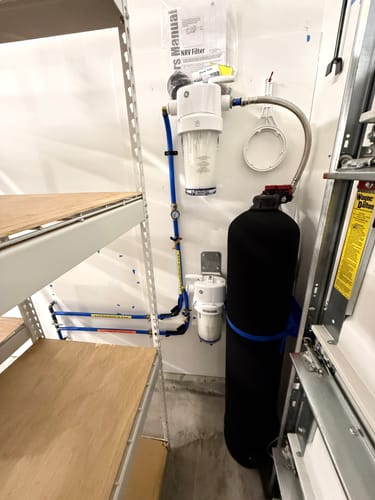
I'll be honest - researching water softeners felt overwhelming at first. There are salt-based ion exchange systems, salt-free conditioners, magnetic treatments, and template assisted crystallization systems, each with passionate advocates claiming their technology is superior.
I started by getting our water professionally tested through a local lab to understand exactly what contaminants we were dealing with. The results showed elevated calcium and magnesium levels (the culprits behind hardness), moderate chlorine levels typical of treated municipal water, and trace amounts of iron that explained the occasional reddish staining in our guest bathroom sink.
After reading dozens of reviews and consulting with three different water treatment professionals, I narrowed my focus to proven ion exchange technology. Why did I skip the salt-free alternatives?
Simply put, our hardness levels were too high for conditioning systems to make a noticeable difference, and I wanted actual mineral removal, not just crystal structure modification.
The SoftPro ECO caught my attention for several specific reasons. First, it's NSF/ANSI 44 certified for hardness reduction, which meant independent verification of performance claims. Second, the demand-initiated regeneration system promised to save both salt and water compared to timer-based units. Third, the compact design would fit in our limited utility room space without requiring major plumbing modifications.
I was particularly impressed by the manufacturer's transparency about capacity ratings. Rather than inflated marketing numbers, SoftPro provides realistic grain capacity based on actual efficiency curves. For our household of three with moderate water usage, the ECO's 32,000 grain capacity translated to approximately 8-10 days between regeneration cycles with our 10 GPG hardness.
Unboxing and First Impressions
The system arrived via freight delivery in a single, well-protected crate. I appreciated that everything needed for installation was included: the main unit, bypass valve assembly, drain line fitting, and detailed installation manual. The build quality immediately stood out - the fiberglass reinforced tank felt substantial, and the electronic control valve had a solid, professional appearance.
Weighing in at about 85 pounds when empty, this isn't a lightweight unit you'll be moving around casually. The 9-inch diameter tank fit perfectly in the space I'd measured, with enough clearance for salt loading and maintenance access. The digital display was clear and intuitive, showing remaining capacity, days until regeneration, and current system status at a glance.
One pleasant surprise was the quality of the installation documentation. Instead of generic instructions, the manual included specific guidance for different plumbing best water softener for city water configurations and local code requirements. They even provided troubleshooting flowcharts for common installation challenges.
The only minor disappointment was that the brine tank arrived separately and required assembly. While not difficult, it added about 30 minutes to the installation timeline. The tank itself is well-designed with a safety float system and easy-access salt grid, but I would have preferred it to arrive pre-assembled.
Installation Experience: Easier Than Expected

I decided to tackle the installation myself, having some plumbing experience and wanting to understand the system thoroughly. The entire process took about four hours, including time to study the manual and double-check connections.
The most challenging aspect was installing the bypass valve assembly on the main water line. I had to shut off water to the house and cut into the existing 1-inch copper pipe. Would I recommend professional installation for most homeowners?
Absolutely, especially if you're not comfortable with pipe cutting and soldering.
That said, SoftPro's installation design is genuinely user-friendly. The inlet and outlet connections are clearly marked, and the bypass valve eliminates the need for multiple shut-off valves. I installed a separate valve before the softener for easier maintenance, which proved wise during my first salt refill.

The drain connection was straightforward - a simple 1/2-inch line routed to our utility sink drain. The system requires both a drain connection and electrical outlet within six feet, which fortunately aligned with our utility room layout. Initial startup involved a manual regeneration cycle to condition the resin bed, which took about 90 minutes.
One installation tip I discovered: leave extra space around the control valve for salt loading. While the manual specifies minimum clearances, having additional room makes monthly maintenance much more comfortable, especially when handling 40-pound salt bags.
Performance Testing: The Numbers Don't Lie
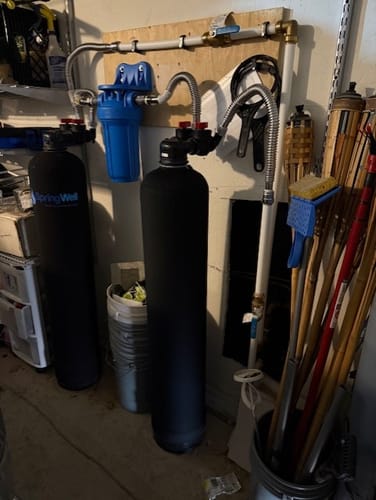
I'm a bit of a data nerd, so I documented everything. Before installation, I measured our water hardness at 11.5 grains per gallon using both test strips and a digital meter. Post-installation testing showed consistent results at 0-1 grains per gallon, effectively eliminating the hardness minerals causing our problems.
The transformation wasn't immediate but became noticeable within 48 hours. Soap began lathering properly in the shower, and that tight, dry feeling on our skin started disappearing. By the end of the first week, new spots weren't appearing on our glassware, and existing buildup began loosening from faucets and showerheads.
I tracked regeneration frequency carefully during the first two months. With our family's usage pattern averaging 280 gallons daily, the system regenerated every 9-10 days, almost exactly matching SoftPro's capacity calculations. Each regeneration cycle consumed approximately 40 gallons of water and 6-8 pounds of salt, translating to about $3-4 in monthly consumable costs.
The demand-initiated regeneration proved its worth during our week-long vacation. Instead of regenerating on a fixed schedule, the system waited until we returned and resumed normal water usage. This efficiency feature alone probably saves us 2-3 unnecessary regeneration cycles annually.
One metric that impressed me was iron removal capability. Our incoming water had about 0.3 PPM ferrous iron, and post-treatment testing showed virtually undetectable levels. The occasional reddish staining in our guest bathroom completely disappeared within a month.

Daily Life Impact: Beyond Just Soft Water
The real test of any home improvement is how it affects daily routines, and the changes have been genuinely noticeable. My wife's skin irritation issues resolved within three weeks of installation. Our dermatologist confirmed during her follow-up appointment that softer water was likely a contributing factor to her improvement.
Household cleaning became noticeably easier. We're using about 30% less detergent in both the washing machine and dishwasher while achieving better results. Soap scum in the shower, which previously required weekly scrubbing, now rinses away with minimal effort. Our cleaning lady even commented on how much easier the bathrooms have become to maintain.
Coffee quality improved dramatically. As someone who takes morning coffee seriously, I can taste the difference soft water makes in extraction. The mineral interference that was creating bitter, harsh notes disappeared, revealing the actual coffee flavors we'd been missing.
Our clothes feel softer and colors stay more vibrant after washing. Whites that had gradually become dingy started looking brighter, and fabric softener became optional rather than mandatory. These might seem like small details, but they add up to a noticeably improved quality of life.
The kids noticed changes too, particularly improved hair texture and reduced scalp irritation after swimming in our neighbor's chlorinated pool. Soft water helps rinse away chlorine more effectively, reducing the harsh effects of pool chemicals on hair and skin.
Operational Costs and Maintenance Reality
Let's talk money, because ongoing costs matter as much as initial investment. I track salt consumption carefully and average about 2.5-3 bags monthly, depending on usage patterns. At approximately $6 per 40-pound bag from our local home improvement store, monthly salt costs run $15-18.
Water consumption for regeneration adds about $8-10 monthly to our utility bill based on our local rates. Combined with salt costs, we're looking at roughly $25-30 monthly in operational expenses. Is this cost justified by the benefits?
Absolutely, considering we're saving money on cleaning products, soap, and appliance maintenance.
Maintenance requirements are minimal but important. Monthly tasks include checking salt levels, cleaning the brine tank if needed, and verifying proper regeneration timing. I spend about 15 minutes monthly on routine maintenance, primarily adding salt and visual system checks.
The annual maintenance is slightly more involved. I clean the resin tank with iron-removing cleanser and inspect all connections for leaks or wear. SoftPro recommends professional service every 3-5 years for complete system evaluation, which seems reasonable for protecting the investment.
One unexpected cost saving has been reduced water heater maintenance. Our previous quarterly descaling treatments are no longer necessary, saving approximately $150 annually in service calls. Over the system's expected 15-20 year lifespan, these savings alone justify a significant portion of the purchase price.
Honest Assessment: What I Wish I'd Known
No product is perfect, and the SoftPro ECO has a few limitations worth mentioning. The electronic control valve, while generally reliable, can be sensitive to power fluctuations. We experienced one minor programming reset during a severe thunderstorm, requiring me to re-enter time settings and regeneration preferences.
Salt bridging has occurred twice in six months, both times during humid summer weather when I overfilled the brine tank. Breaking up the salt bridge required about 20 minutes with a broom handle, but it taught me to monitor salt levels more carefully and avoid overfilling during humid periods.
The system doesn't address chlorine taste or odor, which bothers some family members more than others. While this wasn't our primary concern, households sensitive to chlorine might want to consider additional carbon filtration for drinking water.
Installation flexibility could be better for homes with unusual plumbing configurations. The bypass valve assembly works well with standard setups but might require additional fittings for older homes or non-standard pipe materials.
Would I purchase this system again knowing what I know now?
Without hesitation, yes. The performance, reliability, and efficiency have exceeded my expectations, and the quality of life improvements justify the investment entirely.