
Hi, I'm Kevin M.. I live in Cleveland.
Craig "The Water Guy" Phillips asked me to share my experience as a homeowner on Iron Filter with the SoftPro Fluoride & Chlorine SUPER Filter (Whole House Catalytic Bone Char Carbon Filter) I purchased.
This is how my adventures played out. I hope this helps you in your decision.
Did you know that the average American household consumes over 80 gallons of water daily, yet most of us have no idea what's actually flowing through our pipes?
Six months ago, I was exactly that person – blissfully unaware of what was in my Cleveland tap water until I started noticing some concerning changes. The water had developed an increasingly strong chlorine smell, almost like walking into an indoor pool. My morning coffee tasted off, and my wife started complaining about her skin feeling dry and irritated after showers.
The Wake-Up Call: Discovering What Was Really in Our Water
Living in Cleveland, I'd always assumed our municipal water was decent. The Great Lakes region has a reputation for good water, right? But was I wrong about what "treated" actually meant?
The reality hit me when I decided to test our water after a neighbor mentioned concerns about fluoride and chloramine levels in our area. I purchased a basic TDS meter and some test strips – nothing fancy, but enough to get a baseline reading.
The results were eye-opening. Our incoming water measured 340 parts per million total dissolved solids, with a strong chlorine residual that registered off the charts on my test strips. The pH was sitting at 8.2, which explained the mineral buildup I'd been noticing on our fixtures.
More concerning was learning about Cleveland's water treatment practices. Like many municipalities, they use chloramine – a combination of chlorine and ammonia – for disinfection. While effective at killing bacteria, chloramine is much more persistent than regular chlorine and doesn't dissipate by simply letting water sit out.
I started researching the potential health implications of long-term exposure to these chemicals. What I found made me realize we needed a comprehensive solution, not just a basic carbon filter?
The fluoride levels in our municipal supply were also something I wanted to address. While there's ongoing debate about fluoridation, I preferred having control over what chemicals my family consumes daily.
Research Phase: Understanding My Options for Whole House Filtration
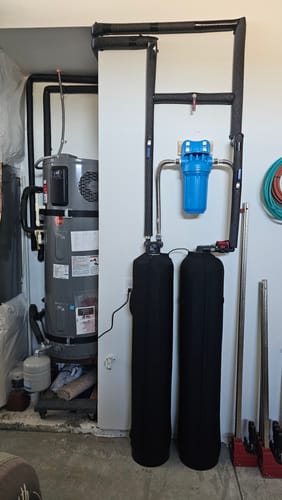
Once I realized we needed a whole house solution, I dove deep into research. I wasn't looking for a quick fix – I wanted to understand the technology behind different filtration methods and find something that would address our specific contaminants comprehensively.
Initially, I considered reverse osmosis systems, but the water waste concerned me. A whole house RO system would waste 3-4 gallons for every gallon of clean water produced. Living in an area with abundant freshwater, it felt irresponsible to waste that much.
Standard activated carbon filters were another option, but I learned they're not effective against fluoride and have limited capacity for chloramine removal. What I needed was something specifically designed for the contaminants in treated municipal water, wasn't it?
That's when I discovered catalytic carbon technology. Unlike regular activated carbon, catalytic carbon is specifically engineered to break down chloramines through a catalytic reaction rather than just absorbing them. This means longer filter life and more effective contaminant removal.
The bone char component was what really caught my attention. Bone char is one of the few media types that effectively removes fluoride through adsorption. It's been used for water treatment for centuries and has a proven track record for both fluoride and heavy metal removal.
I spent weeks reading technical papers, comparing flow rates, and calculating media volumes. The SoftPro system stood out because it combined both catalytic carbon and bone char in a single, upflow design that maximized contact time while maintaining good flow rates.
Why I Chose the SoftPro Catalytic Bone Char System
After comparing dozens of systems, several factors made the SoftPro unit my final choice. The engineering made sense – the upflow design ensures better media utilization and longer contact time compared to downflow systems.
The capacity was right for our household. With four people and typical water usage patterns, the system's flow rate of 7 gallons per minute would handle our peak demand without pressure drops. But would the media capacity actually last as long as advertised?
I was particularly impressed by the backwash capability. Many whole house carbon filters don't include automatic backwashing, which means the media gradually becomes less effective as it clogs with filtered contaminants. The SoftPro system includes a programmable valve that backwashes the media regularly, maintaining optimal performance.
The bone char media volume was substantial – enough to handle our household's fluoride removal needs for 2-3 years based on our usage and incoming fluoride levels. This wasn't some token amount of bone char for marketing purposes; it was engineered for real fluoride reduction.
Another deciding factor was the NSF certification. The catalytic carbon is NSF 42 and NSF 61 certified, ensuring it meets strict standards for contaminant reduction and doesn't leach harmful substances back into the water.
The warranty terms were reasonable – five years on the valve and tank, with clear guidelines for media replacement intervals. This suggested confidence in the product's durability and performance.
Installation Experience: More Straightforward Than Expected

When the system arrived, I was pleasantly surprised by the packaging quality. Everything was well-protected, and the 48-inch tank arrived without any damage despite its weight. The shipping took about 10 days, which was reasonable for a custom-built system.
I had initially planned to hire a plumber, but after examining the installation requirements, I decided to tackle it myself. The system requires a 1-inch main line connection, which matched our existing plumbing perfectly.
The installation manual was comprehensive, with clear diagrams showing proper bypass valve placement and drain connections. Would I encounter any surprises that the manual didn't cover?
The actual installation took me about four hours, including time to install the bypass valves and run the drain line. The tank is substantial – about 48 inches tall and 13 inches in diameter – so I needed help maneuvering it into position in our basement utility room.
One thing I appreciated was that all necessary fittings were included. No surprise trips to the hardware store for missing connectors or adapters. The bypass valves were high-quality ball valves, not the cheap gate valves some systems include.
The initial startup process was straightforward. The system requires a thorough backwash to remove any dust from the media and ensure proper settling. This took about 20 minutes and used approximately 100 gallons of water – a one-time process that's essential for optimal performance.
Programming the control valve was intuitive. I set it for a weekly backwash based on our water usage, though the system can be programmed for different intervals if needed. The digital display clearly shows the current operating mode and days until the next backwash cycle.
Performance Testing: Measuring Real-World Results
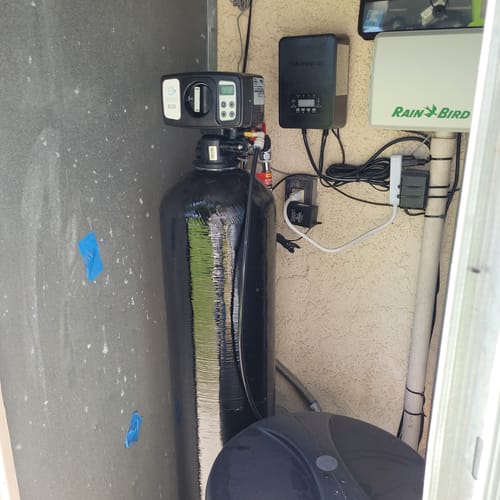
I'm a bit of a data nerd, so I wanted to document the system's performance objectively. I tested our water before installation and have been monitoring it regularly since.
The chlorine/chloramine reduction was immediately apparent. Before installation, our water tested positive for chloramines using DPD test strips. Post-installation, I consistently get zero chloramine readings. The catalytic carbon is clearly doing its job effectively.
Fluoride reduction took a few days to reach optimal levels as the bone char media became fully activated. But was the reduction significant enough to justify the investment?
Using fluoride test strips, our incoming water measured approximately 0.8 ppm fluoride – typical for Cleveland's municipal supply. After two weeks of operation, the filtered water consistently tests at 0.1 ppm or lower, representing about 85-90% fluoride reduction.
The taste improvement was dramatic and immediate. The chlorine smell that had become increasingly noticeable completely disappeared. Our morning coffee tastes significantly better – no more chemical aftertaste that I hadn't realized I was tolerating.
TDS levels dropped from 340 ppm to around 290 ppm. This wasn't unexpected, as the system isn't designed for comprehensive mineral removal like reverse osmosis. The reduction likely represents removal of some dissolved organics and chlorination byproducts.
I also tested for pH changes, which remained stable at around 8.0-8.2. This was important because some filtration methods can significantly alter pH, requiring additional treatment.
Flow rate performance exceeded my expectations. Even during peak usage – multiple showers running simultaneously – I haven't noticed any pressure drops. The 7 GPM rating appears conservative based on our real-world experience.
Six-Month Living Experience: Daily Benefits and Observations
Beyond the technical measurements, the everyday improvements have been substantial. The most immediate benefit was the elimination of the pool-like chlorine smell that had been growing stronger in our water.
My wife noticed skin improvements within the first week. The dryness and irritation she'd been experiencing after showers gradually disappeared. She's convinced it's related to removing the chloramines, and honestly, the timing suggests she's right.
But were there other changes I hadn't anticipated?
Our ice cubes are noticeably clearer now, and drinks mixed with our tap water taste significantly better. I had gotten into the habit of using bottled water for drinking, but now I'm comfortable using water straight from the tap.
I've noticed that our water heater seems to be operating more efficiently. The removed chloramines may have been contributing to some corrosion or buildup that was affecting heat transfer. Our monthly gas bills have decreased slightly, though this could be coincidental.
Laundry seems to be coming out fresher, and we're Visit this link using less fabric softener. Chloramines can affect how detergents work and can make fabrics feel stiffer, so this improvement makes sense.
The automatic backwash cycle runs every seven days, typically at 2 AM when we're not using water. It's virtually silent – I only know it's running if I happen to be in the basement and notice the drain line flowing.
Maintenance has been minimal so far. I check the system monthly, but there's really nothing to do between backwash cycles. The digital display shows everything is operating normally, and the bypass valves allow me to isolate the system if needed.
Operating Costs and Long-Term Considerations
One aspect I carefully considered before purchasing was the ongoing operational costs. Unlike some whole house systems that require expensive replacement cartridges every few months, this system's media is designed for multi-year service life.
The catalytic carbon media should last 4-6 years under normal residential conditions. Bone char typically needs replacement every 2-3 years, depending on incoming fluoride levels and water usage. Would these replacement costs make the system expensive to operate long-term?
Based on current media prices, I estimate annual operating costs around $150-200, including the electricity for the control valve and water used for backwashing. This compares favorably to bottled water costs or frequent cartridge replacements.
The weekly backwash cycles use approximately 150 gallons of water each time. At Cleveland's water rates, this adds about $8 per month to our utility bill. While this isn't insignificant, it's necessary for maintaining media effectiveness.
Energy consumption is minimal. The control valve uses about the same electricity as a digital clock, and there are no pumps or other energy-intensive components.
I've been tracking our overall water usage to understand the system's impact. Interestingly, we're using slightly less bottled water now that our tap water tastes better, which helps offset some of the operational costs.
The tank and valve carry substantial warranties, suggesting low likelihood of major repair costs during the first several years of ownership. The valve is a proven design used across multiple water treatment applications.
Final Assessment: Was This Investment Worth It?
Six months in, I'm genuinely satisfied with this purchase. The system has delivered on its promises for contaminant removal, and the daily quality-of-life improvements have been substantial.
Would I make the same decision knowing what I know now?
Absolutely. The peace of mind alone has been worth the investment. Knowing that my family's daily water consumption is free from chloramines, significantly reduced in fluoride, and tastes great makes the cost seem reasonable.
The installation was more straightforward than I expected, and the ongoing maintenance is minimal. The automatic operation means I don't have to remember to change filters or perform regular maintenance tasks.
If I had to identify any drawbacks, it would be the space requirements and the ongoing water usage for backwashing. The system needs adequate clearance for service access, and the weekly backwash does add to our water bill.
For households dealing with heavily chlorinated or fluoridated municipal water, this system addresses those concerns comprehensively. It's not the cheapest option available, but the engineering quality and performance justify the price point.
The combination of catalytic carbon and bone char in a single system is particularly appealing. Rather than needing multiple treatment stages, everything is integrated into one unit that handles the most common municipal water concerns effectively.
Looking forward, I feel confident this system will continue providing high-quality water for years to come. The media replacement schedule is reasonable, and the robust construction suggests minimal wear over time.
For anyone in a similar situation – dealing with chloramines, fluoride, or general chemical taste issues in municipal water – this system deserves serious consideration. It's a comprehensive solution that addresses multiple contaminants without the waste or complexity of reverse osmosis systems.