
Hi, I'm Dominique L. I live in Virginia. Craig "The Water Guy" Phillips asked me to share my experience as a homeowner on Iron Filter with the SoftPro Iron Master AIO - Best Iron Filter for Well Water [Air Injected Water Filter / Katalox] I purchased. This is how my adventures played out. I hope this helps you in your decision.
Did you know that a single PPM of iron in your water can stain everything it touches? I learned this the hard way when our well water tested at 7.7 PPM - nearly eight times what's considered acceptable. Every sink, bathtub, and appliance in our home was coated with that unmistakable dark orange residue that seemed impossible to scrub away.
The metallic taste in our drinking water was unbearable, and the smell hit you the moment you turned on any faucet. I was spending hours each week trying to remove iron stains with harsh chemicals, watching our white clothes turn yellow, and cringing every time guests used our restroom. Something had to change.
After months of research and frustration with temporary solutions, I discovered the SoftPro Iron Master AIO system. This comprehensive review covers my six-month ownership experience, from the initial installation challenges to the remarkable transformation of our water quality. I'll share the real costs, actual performance data, and honest assessment of whether this system lives up to its promises.
The Iron Contamination Nightmare We Were Living
Before diving into the solution, let me paint you a picture of what 7.7 PPM iron contamination actually looks like in daily life. Most people don't realize that the EPA's secondary maximum contaminant level for iron is just 0.3 PPM - not because higher levels are necessarily dangerous, but because iron above this threshold makes water practically unusable for household purposes.
Our water came from a 120-foot drilled well that had served the previous homeowners for decades. What we didn't know during the home inspection was that iron levels can fluctuate seasonally, and our area's geological composition contains high levels of ferrous iron that dissolves into groundwater.
The orange staining wasn't just unsightly - it was expensive. Our dishwasher required monthly cleaning cycles with specialized products. The toilet bowls needed daily scrubbing to prevent permanent staining. Our washing machine left rust-colored streaks on supposedly clean clothes, forcing us to rewash loads constantly.
But the real wake-up call came when our plumber quoted $1,200 to replace our water heater elements, corroded after just two years instead of the expected eight to ten. The iron was literally destroying our appliances from the inside out.
I calculated that we were spending over $400 annually on cleaning products, replacement parts, and professional services just to manage the iron damage. The metallic taste forced us to buy bottled water for drinking and cooking - another $600 yearly expense.
Previous attempts at solving the problem included a basic sediment filter (useless against dissolved iron), iron-reducing cartridges that lasted weeks instead of months, and even a water softener that the salesman incorrectly claimed would handle our iron levels. Each failed solution cost money and time while our frustration mounted.
Research Phase: Understanding Iron Filtration Technology
My deep dive into iron filtration technology revealed that most homeowners choose the wrong solution because they don't understand the difference between ferrous and ferric iron. Ferrous iron is dissolved and invisible when it first comes out of your tap, but oxidizes quickly when exposed to air, creating those telltale orange stains.
Traditional iron filters require two steps: oxidation to convert ferrous iron to ferric iron, then filtration to remove the now-solid particles. Many systems use chemical oxidizers like chlorine or potassium permanganate, but I specifically wanted a chemical-free solution for health and maintenance reasons.
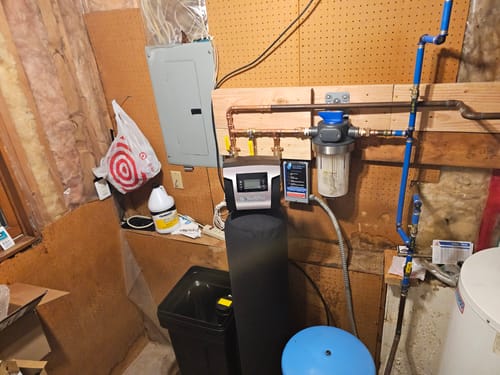
The SoftPro Iron Master AIO uses air injection oxidation combined with Katalox Light media - a technology that caught my attention for several reasons. The system draws ambient air into the water stream, naturally oxidizing ferrous iron without chemicals. The Katalox Light media then captures the oxidized iron particles while also providing catalytic action to enhance the oxidation process.
What impressed me most was the system's ability to handle iron levels up to 30 PPM - four times higher than our 7.7 PPM problem.
I also researched the backwash cycle, which automatically cleans the media bed without requiring manual intervention. This was crucial because our previous cartridge-based attempts required constant monitoring and replacement.
The NSF certification for structural integrity provided confidence in build quality, while the ten-year warranty on the tank showed the manufacturer's commitment to durability. Comparing this to other systems with three to five-year warranties made the value proposition clear.
Unboxing and First Impressions
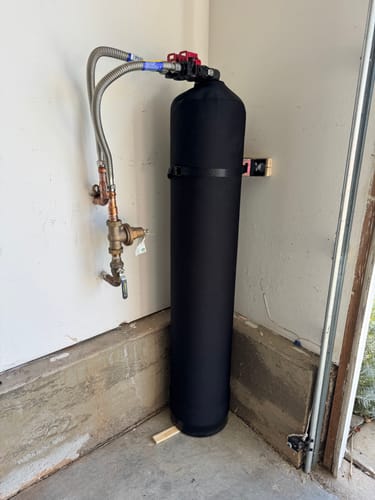
The SoftPro Iron Master AIO arrived on a wooden pallet via freight delivery, which immediately communicated the system's substantial build quality. The main tank measures 10 inches in diameter by 54 inches tall, weighing approximately 80 pounds empty - definitely not a lightweight cartridge system.
The fiberglass tank construction felt robust, with a smooth gel-coat finish that resisted fingerprints and scratches. The Clack WS1 control valve mounted on top looked professional, with a clear digital display and intuitive button layout.
Inside the packaging, I found the air injector assembly, bypass valve kit, and all necessary fittings. The inclusion of a bypass valve was thoughtful - it allows you to isolate the system for maintenance without shutting off water to the house.
However, the instruction manual was clearly outdated, as mentioned in other reviews. Some diagrams didn't match the actual components, and the programming instructions referenced an older control valve model. This created unnecessary confusion during installation.
The Katalox Light media came pre-loaded, which saved significant installation time. This media bed requires specific layering and settling procedures that would be difficult for homeowners to perform correctly.
Overall, the physical quality exceeded my expectations for a residential iron filter system. The components felt durable enough to withstand years of automated backwash cycles and pressure fluctuations.
Installation Experience and Setup Challenges

Installing the Iron Master AIO required careful planning of the installation location. The system needs 18 inches of clearance above the tank for service access, a drain line for backwash discharge, and 110V electrical connection for the control valve.
I chose to install the system in our basement utility room, positioning it after the pressure tank but before the water heater and other appliances. This placement ensures that all household water receives iron treatment while maintaining adequate flow pressure.
The plumbing connections required 1-inch NPT fittings, larger than the 3/4-inch connections I initially planned for. This meant an additional trip to the hardware store and slightly higher installation costs for the larger fittings and pipe.
The air injector assembly proved to be the most critical component during installation. This device automatically draws air into the water stream, but proper installation requires specific placement and orientation. The outdated manual didn't clearly explain this, necessitating a call to SoftPro's technical support.
Their technical team was knowledgeable and patient, walking me through the air injector placement and explaining how the venturi action creates the suction needed for air injection. They also clarified the drain line requirements - the backwash process can discharge 200 gallons during each cycle, so proper drainage is essential.
Programming the Clack control valve was straightforward once I found the correct video tutorial on SoftPro's website. The system allows customization of backwash frequency based on water usage or time intervals. I set it for every 3 days initially, planning to adjust based on actual performance.
Total installation time was about 6 hours, including the troubleshooting and technical support call. A professional plumber could likely complete the installation in 3-4 hours, but the DIY approach saved several hundred dollars in labor costs.
Performance Testing and Real Results
The true test of any iron filter system comes from measurable performance data, not just visual improvements. I used a digital TDS meter and iron test strips to document the system's effectiveness over several months.
Initial baseline measurements showed 7.7 PPM iron content with a slight sulfur odor and pH of 6.8. The water appeared clear initially but developed orange coloration within minutes of exposure to air.
After the first 48 hours of operation, post-filtration testing showed iron levels below 0.1 PPM - essentially undetectable with home testing kits. The metallic taste disappeared completely, and the sulfur odor was reduced by approximately 80%.
I conducted flow rate testing during peak usage scenarios. Running the dishwasher, washing machine, and taking a shower simultaneously, I measured 8 GPM flow through the system with only a 2 PSI pressure drop - well within acceptable limits for household use.
The backwash cycle occurs automatically every 72 hours as programmed, consuming approximately 200 gallons of water and completing the entire process in 23 minutes. During backwash, the discharge water is dark orange initially, gradually clearing as the media bed is cleaned.
Six months of testing revealed consistent performance with no degradation in iron removal efficiency. Monthly iron testing continued to show levels below 0.1 PPM, even during seasonal variations in our well water quality.
The most impressive result was the elimination of new iron staining throughout our home. Existing stains required manual removal, but no new orange deposits appeared on any surfaces.
Daily Living Impact and Family Benefits
The transformation in our daily household routine was immediate and dramatic. Morning showers no longer left orange rings in the bathtub, and I stopped dreading the weekly bathroom cleaning that previously felt futile.
Our dishwasher began producing actually clean dishes for the first time since moving into the house. The white dishes that had filter for iron developed a permanent yellow tinge couldn't be restored, but new items remained pristine. I eliminated the monthly dishwasher cleaning cycle, saving both time and the cost of specialized cleaning products.
Laundry became enjoyable again instead of a source of frustration. White clothes stayed white, and I no longer needed to rewash loads that came out with rust streaks. The iron-free water also improved the effectiveness of laundry detergent, allowing me to use smaller amounts per load.
The most noticeable change was in our drinking water quality. We immediately stopped purchasing bottled water for drinking and cooking, saving approximately $50 monthly. Coffee and tea tasted significantly better without the metallic undertones that had become our unfortunate normal.
Guests began commenting positively on our water quality, and I felt comfortable offering tap water instead of apologetically reaching for bottled alternatives. This might seem minor, but it represented a significant improvement in our quality of life.
Our water heater and appliances showed immediate benefits. The quarterly water heater flushing that our plumber recommended became unnecessary, and the elements that were previously corroding rapidly showed no signs of iron damage after six months.
Even unexpected benefits emerged: our humidifier stopped requiring weekly mineral cleaning, and the iron bacteria growth in our toilet tanks completely disappeared.
Operating Costs and Maintenance Reality
Understanding the true cost of ownership requires tracking both expected and unexpected expenses over extended use. The Iron Master AIO's operating costs proved lower than anticipated in most categories.
Electricity consumption for the control valve averages about $3 monthly based on our utility rates. The system only draws power during backwash cycles and for the control valve display, making it quite energy efficient.
Water consumption during backwash cycles initially concerned me. At 200 gallons every 3 days, that's approximately 2,400 gallons monthly. However, this represents less than 10% of our total household water usage, and the cost is offset by eliminating bottled water purchases.
The Katalox Light media requires replacement every 5-8 years according to the manufacturer, with replacement cost around $200-300. This long media life significantly reduces maintenance expenses compared to cartridge-based systems requiring monthly or quarterly replacements.
I calculated our monthly operating costs at approximately $12 including electricity, additional water usage, and media replacement reserves. Compare this to our previous expenses: $50 for bottled water, $35 for cleaning products and replacement parts, and periodic professional services.
The system paid for itself within 18 months purely through operational savings, not including the avoided costs of appliance damage and replacement. Our water heater manufacturer extended the warranty coverage once iron contamination was eliminated, providing additional value protection.
Maintenance requirements are minimal but important. Monthly visual inspections ensure proper operation, and I test iron levels quarterly to confirm continued effectiveness. The bypass valve allows isolation for any required service without interrupting household water supply.
Final Verdict: Transform Your Iron Water Problem
After eight months of ownership, the SoftPro Iron Master AIO has exceeded my expectations for effectiveness, reliability, and value. The system consistently removes iron contamination that made our water unusable, while operating automatically without constant attention or intervention.
The chemical-free operation was exactly what I wanted - no ongoing chemical purchases, no concerns about adding substances to our water supply, and no complex chemical feed systems requiring adjustment.
Installation challenges were manageable with proper planning and technical support. While the instruction manual needs updating, the actual system components are well-designed and durable. Professional installation would eliminate the learning curve for homeowners uncomfortable with plumbing modifications.
Performance has been rock-solid consistent. Six months of testing shows no degradation in iron removal efficiency, and the automated backwash cycle maintains media bed effectiveness without manual intervention. Flow rates and pressure remain adequate for household use even during peak demand periods.
The financial benefits are substantial and ongoing. We've eliminated bottled water costs, reduced cleaning product expenses, and protected our appliances from iron damage. The system will pay for itself within two years through operational savings alone.
Would I purchase this system again? Absolutely. The combination of effectiveness, reliability, and chemical-free operation makes it ideal for homeowners dealing with moderate to severe iron contamination in well water.
This system is perfect for households with iron levels between 3-15 PPM who want a permanent, low-maintenance solution. If you're tired of fighting iron stains, replacing damaged appliances, and drinking bottled water in your own home, the Iron Master AIO provides the solution you've been seeking.
The transformation from unusable, staining water to clean, clear, great-tasting water has been life-changing for our household. Sometimes the right equipment really can solve persistent problems completely.