
Hi, I'm Mark W.. I live in Charlotte. Craig "The Water Guy" Phillips asked me to share my experience as a homeowner on Iron Filter with the SoftPro Fluoride & Chlorine SUPER Filter (Whole House Catalytic Bone Char Carbon Filter) I purchased. This is how my adventures played out. I hope this helps you in your decision.
Did you know that installing a whole house water filter can turn into a complete plumbing nightmare if you don't know one crucial step?
I learned this the hard way when my brand-new SoftPro Fluoride & Chlorine SUPER Filter clogged every toilet and sink in my house on day one. But before you write this system off, let me tell you the rest of the story – because once I got past that initial disaster, this filter has been quietly transforming our water quality for the past eight months.
When I first started researching whole house water filters, I thought I was pretty well-prepared. I'd read reviews, compared specifications, and even measured the space in my utility room twice. What I didn't expect was to spend my first weekend as a filter owner frantically removing faucet aerators and fishing chunks of activated carbon out of my plumbing fixtures. Looking back, it's almost funny – but trust me, it wasn't amusing at the time.
The SoftPro Whole House Upflow Catalytic Bone Char Carbon Water Filter promised to tackle chlorine, fluoride, and a host of other contaminants using a sophisticated two-stage filtration approach. The catalytic carbon would handle chlorine and chloramines through advanced oxidation, while the bone char would target fluoride and heavy metals. On paper, it looked like exactly what our household needed. In practice, well, let me walk you through the real experience.
The Water Quality Problems That Led Me Here
Our municipal water in Charlotte isn't terrible, but it's not great either. The chlorine smell hit you the moment you turned on any faucet, and I'd grown tired of that swimming pool aroma wafting up from our morning coffee. My wife complained that her skin felt dry and itchy after showers, and I noticed our clothes seemed to fade faster than they should after washing.
But the real wake-up call came when I tested our water with a TDS meter and chlorine test strips. The total dissolved solids weren't alarming at around 180 ppm, but the free chlorine levels consistently measured between 2.5 and 3.2 ppm – well within EPA guidelines but higher than I was comfortable drinking long-term. When I researched our local water quality report, I discovered they were also adding fluoride at 0.8 ppm, which concerned me given some of the recent studies I'd been reading.
I initially tried a simple carbon pitcher filter, but filling it multiple times daily became tedious, and it did nothing for shower water or cooking. A countertop system seemed like the next logical step, but again, it only addressed drinking water while leaving the chlorine to continue damaging our skin and hair. I needed something comprehensive – a whole-house solution that would treat every drop of water entering our home.
After researching different technologies, I became particularly interested in catalytic carbon systems. Unlike standard activated carbon, catalytic carbon can break down chloramines through a process called catalytic reduction, essentially destroying these disinfection byproducts rather than just absorbing them. The bone char component appealed to me because of its unique ability to remove fluoride through ion exchange and adsorption mechanisms that regular carbon simply can't match.
Why I Chose This Specific Filter System
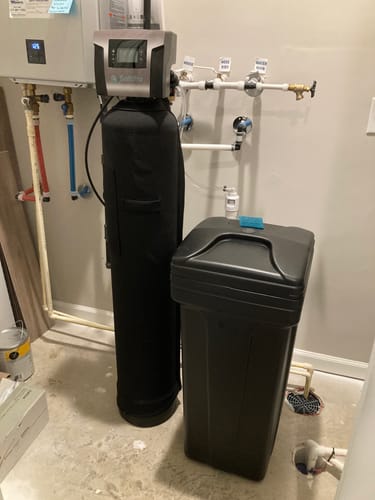
The decision process took me about six weeks of research and comparison shopping. Fluoride removal filtration I looked at everything from simple sediment-carbon combinations to complex multi-stage systems with UV sterilization. The SoftPro system caught my attention because it specifically addressed my two biggest concerns: chlorine removal and fluoride reduction.
What really sold me was the upflow design. Most whole house filters use downflow operation, where water enters the top and flows down through the media. Upflow systems reverse this process, forcing water up through the filter bed. This creates better contact time between water and media, reduces channeling where water finds the easiest path through the carbon, and allows for more effective backwashing to clean the media.
The system's flow rate specification of 12 GPM seemed adequate for our household of three, with enough headroom for simultaneous usage like running the dishwasher while someone showered. The 1.5 cubic feet of catalytic carbon meant a contact time of approximately 4-6 minutes under normal flow conditions – well within the range needed for effective chlorine and chloramine removal.
I was also impressed by the bone char component, which makes up about 30% of the total media volume. Bone char has a fascinating history in water treatment, originally developed in the sugar refining industry. Its unique pore structure and surface chemistry make it particularly effective at removing fluoride, heavy metals like lead and mercury, and even some radioactive contaminants. The calcium phosphate matrix in bone char creates ion exchange sites that specifically target fluoride ions.
The automated backwash controller sealed the deal. Every few days, the system automatically reverses flow and flushes accumulated debris from the filter media, extending its life and maintaining performance. Manual backwashing systems require you to remember and perform this maintenance, which honestly, I knew I'd probably forget to do consistently.
Unboxing and Initial Setup Preparation
The system arrived in two separate boxes – one containing the fiberglass tank and control valve, another with the filter media and installation hardware. The packaging was professional grade with plenty of foam protection, though the tank box was surprisingly heavy at around 85 pounds fully loaded.
My first impression of the build quality was positive. The 10-inch diameter fiberglass tank felt solid and well-constructed, with a NSF-certified control valve that looked substantially more robust than the plastic valves I'd seen on some competitors. The digital display was clear and intuitive, with simple programming buttons and LED indicators for system status.
The installation manual was comprehensive – perhaps too comprehensive. At 24 pages, it covered everything from basic plumbing connections to advanced programming options, but I found myself wishing for a simple "quick start" section. The technical diagrams were detailed and accurate, though some of the troubleshooting sections assumed more plumbing knowledge than I possessed.
One thing that concerned me initially was the bypass valve configuration. The system requires a three-valve bypass setup to allow water flow around the filter during maintenance or emergencies. The manual mentioned this was "essential" but didn't emphasize how critical it would be during the initial startup process.
The Installation Disaster (And What I Learned)

Here's where my story takes a turn that I haven't seen mentioned in other reviews, and frankly, I wish someone had warned me about this beforehand. The installation itself went smoothly – I'm reasonably handy and had no trouble with the plumbing connections, electrical hookup, or programming the control valve.
The disaster struck when I opened the main water supply and started using the system. Within hours, every toilet in the house was sluggish, faucet aerators were clogged, and our dishwasher's rinse aid dispenser was completely blocked. I initially thought something was wrong with our municipal water supply, but when I opened the first faucet aerator, I found it packed with what looked like small black particles.
It turns out that new catalytic carbon and bone char media contain fine particles and carbon dust that must be flushed out before the system goes into service. This isn't mentioned prominently in the installation instructions, buried instead in a small paragraph on page 18. The "startup procedure" section talks about running a manual backwash cycle but doesn't emphasize that you need to run multiple cycles and flush the lines thoroughly before connecting to your household plumbing.
I spent the better part of a weekend disassembling faucets, cleaning aerators, and running multiple backwash cycles until the flush water finally ran clear. The control valve allows manual initiation of backwash cycles, so I ran four complete cycles over two days, each lasting about 12 minutes and using roughly 40 gallons of water.
In hindsight, this was entirely preventable. The correct startup procedure involves putting the system in bypass mode, running multiple manual backwash cycles until the discharge water is clear, then gradually introducing filtered water to your plumbing while flushing individual fixtures. Live and learn, I suppose.
Performance Testing and Real-World Results
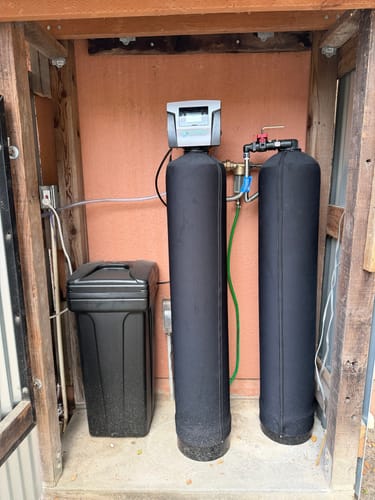
Once I got past the startup fiasco, the system's performance has been consistently impressive. I've been monitoring water quality with test strips and a digital TDS meter, taking measurements monthly at different fixtures throughout the house.
Chlorine removal has been virtually complete. Pre-filtration levels that typically measured 2.5-3.2 ppm now consistently test at 0.0 ppm throughout the house. Even more impressive, chloramine levels – which I started testing for after learning our utility occasionally switches disinfection methods – are also undetectable post-filtration.
The fluoride reduction has been substantial but not complete, which aligns with what I've learned about bone char limitations. Pre-filtration levels of 0.8 ppm now measure between 0.2 and 0.3 ppm – roughly 70% reduction. While not the 95% reduction sometimes advertised for bone char systems, this level of performance is actually typical for whole-house applications where contact time is limited compared to point-of-use systems.
TDS levels have dropped from around 180 ppm to 145-150 ppm, indicating the system is removing some dissolved minerals along with contaminants. The pH has remained stable at 7.2-7.4, suggesting the bone char isn't significantly altering water chemistry beyond removing specific contaminants.
What I've found most noticeable are the practical improvements in daily life. Coffee and tea taste noticeably cleaner without the chlorine flavor masking subtle notes. My wife reports that her skin feels less dry after showers, and we've both noticed that our hair seems softer and more manageable. Laundry detergent seems to work more effectively, and colors appear more vibrant in clothes washed with filtered water.
The system maintains consistent pressure throughout the house, even during peak usage periods. I've measured pressure at various fixtures before and after installation, finding only a 2-3 PSI reduction, which is well within acceptable limits and barely noticeable during actual use.
Operating Costs and Maintenance Reality
The ongoing costs are more manageable than I initially expected, though they're not insignificant. The system automatically backwashes every three days, consuming approximately 40 gallons per cycle. At our local water rates of $4.50 per thousand gallons, this adds roughly $2.60 per month to our water bill.
Electrical consumption for the control valve is minimal – the manufacturer specs indicate 8 watts during backwash cycles and less than 1 watt in standby mode. Given that backwash cycles run about 12 minutes every three days, monthly electrical costs are probably under $1.
The major expense will be media replacement. Catalytic carbon and bone char media should last 3-5 years depending on usage and water quality, with replacement costs around $300-400 for both media types. This works out to roughly $7-11 per month if amortized over the media's lifespan.
Comparing this to our previous bottled water habit – we were spending about $35 monthly on drinking water alone – the economics are favorable. Factor in the benefits for cooking, bathing, and appliance protection, and the value proposition becomes even stronger.
Maintenance has been minimal so far. The control valve tracks gallons processed and days since last regeneration, automatically adjusting backwash frequency based on actual usage. I check the display monthly and occasionally run manual backwash cycles if we've had unusually high water usage, but the system largely manages itself.
Limitations and Things I Wish Were Different
No system is perfect, and this one has some quirks that potential buyers should understand. The biggest limitation is the incomplete fluoride removal – while 70% reduction is significant, households wanting near-complete fluoride elimination would need additional point-of-use treatment.
The backwash discharge requires proper drainage, and the 40-gallon volume every few days could be problematic if your septic system is undersized or if local regulations restrict water softener discharges. In our case, the utility room drain connects to the municipal sewer system, so this hasn't been an issue.
The control valve programming, while functional, feels dated compared to modern smart home systems. There's no Wi-Fi connectivity, smartphone app, or remote monitoring capability. For a system in this price range, some level of connected functionality would be appreciated.
Space requirements are substantial – the tank measures 10 inches diameter by 54 inches tall, plus clearance needed for the control valve and plumbing connections. Our utility room accommodates this easily, but smaller mechanical spaces might struggle to fit the system.
The initial media flushing requirement, while not technically a limitation, represents a significant oversight in the installation documentation. This really should be emphasized more prominently to prevent the experience I had.
Final Assessment and Recommendation
Eight months into ownership, I'm genuinely satisfied with this system's performance despite the rocky start. The water quality improvements are noticeable and measurable, operating costs are reasonable, and maintenance has been minimal. Most importantly, it's delivering on the primary goals I set: effective chlorine removal and substantial fluoride reduction.
Would I recommend this system?
For households specifically concerned about chlorine, chloramines, and fluoride in municipal water supplies, yes. The catalytic carbon and bone char combination addresses these contaminants more effectively than simple activated carbon systems, and the upflow design optimizes contact time for better performance.
This system makes the most sense for families who want comprehensive treatment without the complexity of multi-stage systems requiring multiple filter changes. If your primary concerns are sediment and basic chlorine removal, simpler and less expensive options would probably suffice. But if fluoride reduction is important to you, bone char systems like this one are among the few whole-house options available.
The installation challenges I experienced could have been avoided with better preparation and more careful attention to the startup procedure. Don't let my initial difficulties discourage you – just make sure to plan for proper media flushing before putting the system into service.
For what it's worth, I'd purchase this system again knowing what I know now. The water quality improvements have been worth the investment, and I expect the benefits will continue for years as the media gradually removes accumulated contaminants from our household water supply.