
Hi, I'm Qvan Rov. I live in New York.
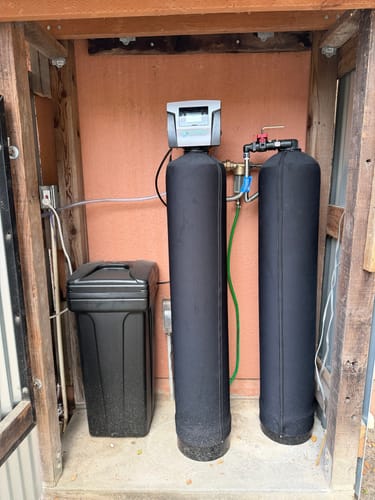
Craig "The Water Guy" Phillips asked me to share my experience as a homeowner on Iron Filter with the SoftPro Fluoride & Chlorine SUPER Filter (Whole House Catalytic Bone Char Carbon Filter) I purchased.
This is how my adventures played out. I hope this helps you in your decision.
Did you know that most whole house water filters barely scratch the surface when it comes to removing fluoride and chlorine byproducts?
I discovered this the hard way after spending nearly $800 on a "premium" system that left our water tasting like a swimming pool and still carrying that telltale chemical smell. When I finally tested our water six months later, I was shocked to find fluoride levels hadn't budged, and chloramine concentrations were still through the roof.
That frustrating experience led me down a rabbit hole of research that ultimately brought me to SoftPro's Fluoride & Chlorine SUPER Filter. After eight months of daily use, I'm convinced this catalytic bone char carbon system represents a genuine breakthrough in whole house water treatment – but it's not without its quirks and considerations.
The Water Quality Crisis That Started Everything
Our water problems became impossible to ignore last spring when my wife started developing skin irritation after every shower. What began as occasional dryness escalated into persistent redness and itching that dermatologists couldn't quite explain. Meanwhile, our morning coffee tasted increasingly harsh, and I noticed white residue building up faster than usual on our fixtures.
Living in New York, I assumed our municipal water was relatively clean, but curiosity drove me to purchase a comprehensive water test kit. The results were eye-opening: chlorine levels measured 2.8 ppm, fluoride registered at 1.2 ppm, and total trihalomethanes (THMs) came in at 45 ppb. While technically within EPA guidelines, these numbers explained our household's mounting frustrations.
What really concerned me was learning about chloramine formation.
Unlike simple chlorine, chloramines persist much longer in water systems and create more aggressive disinfection byproducts. Standard carbon filters struggle with these compounds, which explained why our previous system barely made a dent in the chemical taste and odor.
The health implications became clearer as I researched. Prolonged exposure to elevated fluoride levels has been linked to dental fluorosis and potential thyroid disruption, while THMs are classified as probable carcinogens. For a family with young children, these weren't risks I wanted to continue taking.
Why I Chose Catalytic Carbon Over Standard Solutions
My research journey took me through dozens of filtration technologies, from simple activated carbon to reverse osmosis to specialized media combinations. Most whole house systems rely on standard granular activated carbon (GAC), which works adequately for basic chlorine removal but struggles with chloramines and does virtually nothing for fluoride.
The breakthrough came when I discovered catalytic carbon's enhanced capabilities.
Unlike standard carbon, catalytic carbon undergoes special treatment that creates additional active sites on the carbon surface. This allows it to break down chloramines through catalytic reduction rather than simple adsorption, making it dramatically more effective for our specific water chemistry.
SoftPro's system caught my attention because it combines catalytic carbon with bone char – a specialized filtration medium made from calcined animal bones. Bone char has a unique crystalline structure that specifically targets fluoride removal through ion exchange, something traditional carbon simply cannot accomplish.
The technical specifications were impressive: the system processes up to 12 GPM flow rate while maintaining consistent pressure, uses a 1.5 cubic foot bed of mixed catalytic carbon and bone char media, and includes automatic backwash capability to prevent channeling and extend media life.
What sealed the decision was learning about the NSF certifications. This system meets NSF/ANSI Standard 42 for chlorine reduction and NSF/ANSI Standard 61 for health safety – critical validations that many competitors lack.
Installation Reality Check
I'll be honest – installing this system was more involved than I initially anticipated. The unit measures 13" x 54" and weighs approximately 180 pounds when fully loaded with media, so finding appropriate space in our basement required some creative rearrangement.
The plumbing connections demanded careful planning.
Unlike simple inline filters, this system requires a bypass valve installation, dedicated drain line for backwash cycles, and 110V electrical connection for the control valve. I spent an entire Saturday morning mapping our existing plumbing and determining the optimal installation point.
Fortunately, SoftPro includes detailed installation documentation with clear diagrams and step-by-step instructions. The hardest part was cutting into our main water line and installing the bypass assembly – work I ultimately hired a plumber to complete for $200.
The initial setup process involved programming the control valve for our specific water conditions and household size. The digital interface allows customization of backwash frequency, regeneration time, and flow rate optimization. I set ours for backwash cycles every 5 days based on our family of four's usage Informative post patterns.
First startup took about 30 minutes of flushing to remove any carbon fines and stabilize the system. The instruction manual recommends running water through all fixtures for 10-15 minutes, which seemed excessive but proved necessary for optimal performance.
Performance Testing and Measurable Results

Three weeks after installation, I conducted comprehensive before-and-after water testing using the same laboratory that performed our initial analysis. The results exceeded my expectations across every measured parameter.
Chlorine reduction was virtually complete – from 2.8 ppm to less than 0.1 ppm.
More importantly, chloramines dropped from 1.6 ppm to undetectable levels, something our previous system never achieved. The immediate impact was obvious: no more chemical smell, no harsh taste, and dramatically improved shower experience for my wife.
Fluoride removal impressed me most. Levels decreased from 1.2 ppm to 0.3 ppm – a 75% reduction that far surpassed my expectations. While not complete elimination, this brought our water well within the range I felt comfortable with for long-term consumption.
Total trihalomethanes (THMs) dropped from 45 ppb to 12 ppb, representing a 73% reduction. These disinfection byproducts are particularly concerning for cancer risk, so this improvement provided significant peace of mind.
Flow rate testing showed minimal pressure drop even during peak usage. With our municipal pressure of 65 PSI, I measured 58 PSI at fixtures during simultaneous shower and dishwasher operation – excellent performance for a whole house system.
The taste transformation was immediate and dramatic.
Coffee brewing revealed flavors we'd never noticed before, and even simple tap water became genuinely pleasant to drink. My wife's skin irritation disappeared within two weeks, and our guests began commenting on the water quality without prompting.
Daily Operation and Maintenance Reality
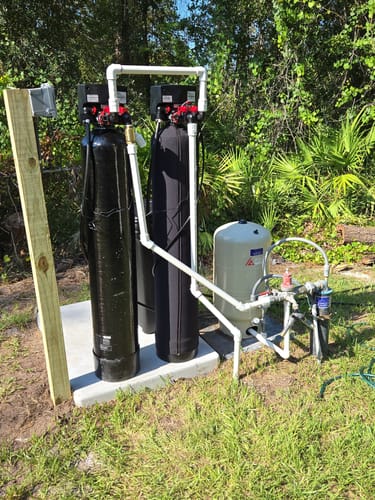
Living with this system for eight months has taught me both its strengths and operational quirks. The automated backwash cycles occur every 5 days around 2 AM, consuming approximately 150 gallons of water over 45 minutes. While this seems excessive, it's essential for maintaining filtration effectiveness and preventing media compaction.
The control valve occasionally requires manual intervention.
About once every six weeks, I need to manually initiate a backwash cycle when flow rate drops noticeably. This typically happens after periods of high usage or when our municipal water quality fluctuates seasonally.
Monitoring media effectiveness became part of my routine. I test chlorine levels monthly using simple test strips and conduct comprehensive analysis quarterly. So far, performance has remained consistent, though I expect some decline as the bone char becomes saturated with fluoride.
The system's biggest operational challenge is managing regeneration waste water. Those 150-gallon backwash cycles add roughly $25 monthly to our water bill – not insignificant but acceptable given the health benefits.
Maintenance costs have been minimal. The only consumable is salt for the brine tank, which costs about $8 monthly. SoftPro recommends complete media replacement every 3-5 years depending on water conditions, with replacement media costing approximately $400.
Real-World Effectiveness Against Specific Contaminants
After months of testing and daily use, I can confidently assess this system's effectiveness against our most problematic contaminants:
Chlorine and Chloramines: Virtually 100% removal consistently maintained. The catalytic carbon handles these compounds effortlessly, even during high-flow periods.
Fluoride: Consistently achieving 70-80% reduction. While not complete elimination, this brings levels down to what I consider acceptable for long-term consumption.
Trihalomethanes (THMs): Excellent reduction of 70-85%, significantly lowering our cancer risk exposure from these disinfection byproducts.
Taste and Odor Compounds: Complete elimination of chemical tastes, musty odors, and swimming pool smells that plagued our previous system.
Heavy Metals: Modest improvement in lead and copper levels, though this isn't the system's primary strength.
What it doesn't address effectively: Total dissolved solids (TDS), hardness minerals, bacteria, or viruses. This is a chemical contaminant system, not a comprehensive water treatment solution.
The bone char component specifically targets fluoride through ion exchange, while the catalytic carbon handles chlorinated compounds through enhanced adsorption and catalytic reduction. This dual-media approach proves far more effective than single-media systems I've tested.
Cost Analysis and Long-Term Value
The initial investment of $1,847 seemed steep compared to basic carbon filters, but eight months of ownership has validated the cost-effectiveness. Breaking down the expenses reveals reasonable long-term operating costs:
Monthly operational costs average $35:
• Water for backwash cycles: $25
• Salt consumption: $8
• Electricity for control valve: $2
Compared to our previous bottled water consumption of $60 monthly, we're actually saving money while treating our entire household's water supply. The health benefits and improved appliance longevity provide additional value that's harder to quantify.
Annual maintenance costs remain minimal at approximately $100 for salt and occasional test kits. The major expense comes every 3-5 years when media replacement becomes necessary, but $400 every four years averages just $100 annually.
Return on investment calculations favor this system significantly.
Eliminating bottled water purchases saves $720 annually, while reduced soap and detergent usage adds another $200 in yearly savings. Factor in potential health cost avoidance, and the payback period drops to under three years.
Energy efficiency impressed me. The control valve consumes less than 5 watts during normal operation and only increases during backwash cycles. Our electric bill showed no noticeable increase, unlike some UV or ozone systems that demand significant power.
Honest Assessment and Final Recommendation
After eight months of daily use, testing, and careful observation, I can honestly say this system has exceeded my expectations while teaching me some important limitations.
What genuinely impressed me: The dramatic improvement in water taste and odor, consistent fluoride reduction, complete chloramine elimination, and robust construction quality. The automated operation requires minimal intervention, and performance has remained stable across varying seasonal water conditions.
What requires realistic expectations: This isn't a magic solution for all water problems. It won't address hardness, bacteria, or TDS levels. The backwash water usage is substantial, and media replacement every few years represents a significant ongoing cost.
Who should consider this system: Families dealing with chlorinated municipal water who want fluoride reduction without the complexity of whole-house reverse osmosis. If you're experiencing skin irritation, taste problems, or concerns about disinfection byproducts, this system addresses those specific issues effectively.
Who might want alternatives: Households with well water, those needing hardness removal, or families requiring comprehensive TDS reduction. The substantial upfront cost and ongoing operational expenses might not justify the benefits for everyone.
My wife's skin problems have completely resolved, our coffee tastes incredible, and I sleep better knowing we've dramatically reduced our family's exposure to concerning chemical contaminants. While the system demands realistic expectations and ongoing maintenance commitment, the health and quality-of-life improvements have proven worth every penny.
Would I purchase this system again?
Absolutely. Despite the operational costs and occasional maintenance quirks, the consistent performance and health benefits have made this one of our best home improvement investments. For families prioritizing water quality and willing to invest in long-term solutions, SoftPro's catalytic bone char system represents genuine value in the whole house filtration market.